
As roads and houses creep into shoreland areas, the behavior, reproduction, and survival of animals can be affected as human activities and structures degrade the surrounding wildlife habitat. Although researchers have estimated that animal habitat can be affected up to 1,500 feet away from human activities and structures, it may not be realistic to provide such a wide berth. But preserving and restoring shoreland vegetation can help limit the impact of these disturbances, which might include subtle changes in vegetation and animal travel patterns. In other words, how you manage your shoreline will determine how attractive it is to birds, frogs, turtles and other wildlife.
Every spring and fall, migrating songbirds and waterfowl use the Wisconsin and Mississippi rivers as travel corridors, just as European settlers did when they migrated into the state. Migrating birds depend on shoreland corridors for food, cover and nesting areas. Many studies have confirmed that the key to preserving the diversity and abundance of birds is to preserve plant diversity. Most woodland birds, for instance, require several layers of vegetation, from groundcovers to shrubs to trees. Grassland and wetland birds need a diversity of native grasses, wildflowers and shrubs. Simply put, more plants mean more foraging and nesting sites, thus more birds.
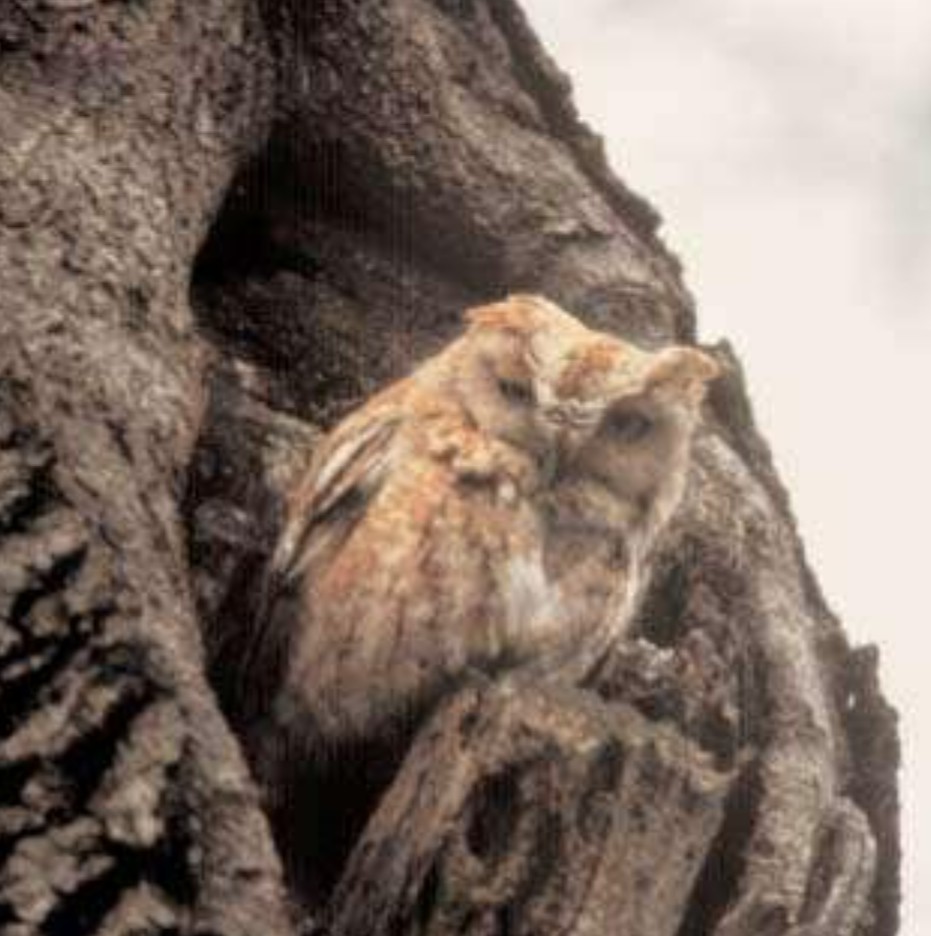
The structure of the habitat is important, too. For example, some birds prefer trees with a certain diameter (24 to 30 inches at breast height for wood ducks) for nesting, while birds such as kingfishers use shrub cover along the water to conceal their brood. Cavity trees are used by many kinds of birds for nesting, including wood ducks, hooded mergansers, and owls. Osprey, kingfishers, flycatchers and other birds can often be found perching in dead trees, or snags, along the water watching for food. Bats roost under the loose bark of dying trees when they are not out catching insects. A single bat can eat as many as 1,200 bugs during an evening – among them many mosquitoes.
Amphibians and reptiles such as salamanders, frogs, and turtles are common along natural shorelands. They often require water or damp areas to reproduce, and may move into upland areas for portions of the year. Salamanders and frogs need unbroken shoreland corridors because they are often unable to safely cross even small areas of unsuitable habitat, such as roads and parking lots. To a salamander, whose life revolves around water, a cement curb or retaining wall might as well be the Great Wall of China.
Since so many different types of animals rely on shorelands, it is difficult to select a single width that can preserve shoreland habitat for all wildlife. Recommendations vary depending on the animal and its needs. Some animals are more sensitive to human activities, and as a result, require more room. General recommendations to preserve wildlife habitat vary from 30 feet to over 300 feet wide, with some recommendations exceeding 1,500 feet.
Muskrats do fine with approximately 30 feet of natural shorelands but kingfishers, turtles and frogs prefer 100 feet to over 300 feet. Some animals, such as herons, scarlet tanagers and the American redstart may need over 400 feet to 600 feet of natural shorelands to successfully reproduce and grow.
It is often unrealistic to have widths of 600 feet or more of shorelands preserved for wildlife. However, narrower corridors of shorelands surrounding our lakes and rivers will still provide wildlife habitat for some animals. When shoreland development completely rings a lake or follows the twists and turns of the river, it is important to restore wildlife travel corridors to and from the water. These travel corridors can provide access to larger tracts of land when the habitat needs of some animals cannot be met at the water’s edge.