
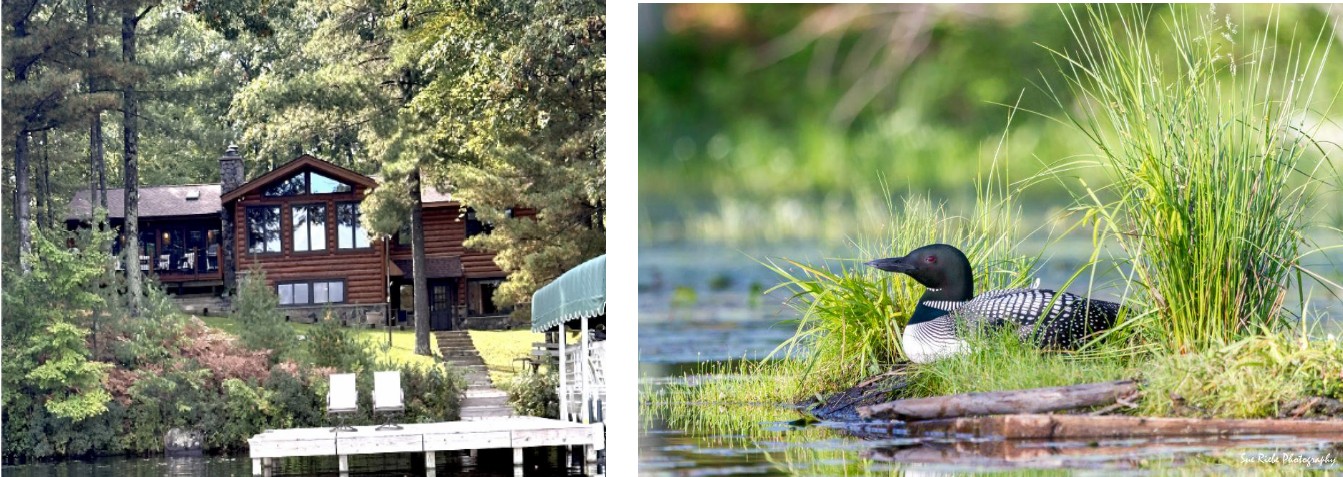
The simplest thing you can do as a shoreline homeowner is to not mow all the way to the water’s edge. A 10 to 35-foot buffer of natural grasses, shrubs, and wildflowers between your lawn and the lake creates a natural buffer to filter pollutants and runoff before it gets to the lake. A natural buffer also deters geese, because they won’t go ashore where they can’t see what’s ahead of them.
WANT TO DO MORE?
TAKE THE LAKE STEWARD PLEDGE AND
GET A FREE COPY OF SHORELAND LIVING
TO SEE WHAT’S POSSIBLE
- Take The Pledge – Become A Lake Steward. It’s not someone else’s responsibility to preserve the health of our beloved Minocqua and Kawaguesaga Lakes – it’s yours, mine, together. So, let’s keep the water in Lake Minocqua and Lake Kawaguesaga clean for generations to come.
- Follow as many of the 10 simple steps that you can. By takingThe Pledge , you’re committing to take steps on your property and the water that makes a big difference on Lake Minocqua and Lake Kawaguesaga.
1. Capture Water Runoff Before It Reaches the Lake
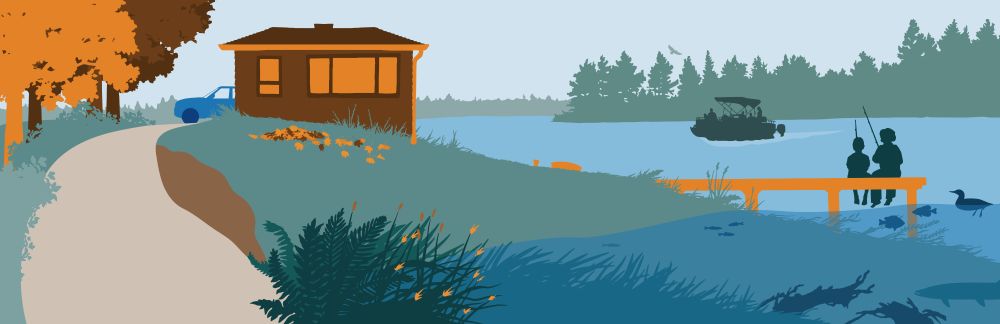
Ideally, property owners capture water runoff before it reaches the lake. Install a rain garden in your yard using native plants. Rain gardens can slow water flow, allowing the water to soak into the ground rather than flow to the lake. Rain barrels also help capture the water draining from your roof. Use the water in your rain barrel to water the plants in your yard.
2. Don’t Mow to the Edge of the Water
Natural shorelands contain a lush mixture of native grasses, flowers, shrubs, and trees that help to reduce and filter polluted water runoff and provide essential habitats for songbirds and other animals on the land and in the water.
The easiest and least expensive way to filter water runoff and establish critical habitat for loons, bees, butterflies, birds, fish, and wildlife is to establish a “no mow” area or plant a natural garden from the water's edge to your lawn. The WDNR recommends a minimum 10 to 35-foot buffer between your lawn and the lake. This natural barrier also deters geese. In contrast, lawns mowed to the water's edge provide a habitat for geese and create much more runoff that carries pollutants into the lake.
3. Minimize or Eliminate Chemical and Fertilizer Use
Since it’s clear that chemical and fertilizer drainage are toxic to our lakes, be sure runoff is filtered through no-mow or native shoreland plantings. Step three is to minimize or eliminate harmful chemicals, household cleaners, and fertilizers used in your yard. Insecticides and pesticides kill bees, butterflies, and birds, so cease or reduce their use.
4. Don’t Rake or Blow Leaves Into the Lake
Leaves provide natural winter protection for butterflies, moths, bumble bees, and beneficial critters like beetles, millipedes, and spiders. If you have leaves, it’s better to rake them into shrubs, trees, flower, or vegetable gardens. The leaves suppress weeds and insulate the roots.
Leaves blown into the lake act like a brewed cup of phosphorus tea, encouraging aquatic plant and algae growth. Preventing nuisance levels of plants and algae requires keeping phosphorus on the land and out of the lake.
5. Eliminate Bare Soil Spots on Your Property
Soil also naturally contains phosphorus. Therefore, bare soil containing phosphorus-packed particles produces phosphorus-fueled water runoff.
6. Reduce Road Salt Use
A 12-ounce cup of salt, the size of a standard coffee cup, is enough to treat 20 feet of your driveway. Use salt sparingly and investigate other methods to reduce slippery surfaces. Remember, everything on land ends up in the water, and increased salt concentrations are toxic to aquatic life.
7. Maintain Your Septic System
Just like owning a car, there is service required for septic systems to prevent premature failure. Septic seepage can run into the lake under the ground. This waste acts like a fertilizer, which causes an increase in weeds and algae growth.
Have your septic system pumped or inspected every three years by a professional. If you don’t recall the last time someone checked your septic system, please schedule an inspection.
8. Allow Native Aquatic Plants and Fallen Wood to Remain in the Lake
Action step eight is another simple, no-cost, effective way to better the health of our lake: allow native aquatic plants and fallen wood/trees to remain in the lake. Below the water, this wood acts as feeding, breeding, and nesting areas for all critters, from fish to songbirds. Above the water, ducks, geese, turtles, and other creatures use the wood to sun themselves.
9. Boating Stewardship
Enjoy boating in deep enough water to ensure your boat's wake does not cause shoreline erosion and the propeller wash does not adversely impact water vegetation or wildlife habitat areas.
10. Respect the Wildlife on the Lake
Enjoy the scenery and wildlife on the lake; do not chase, harass, or disturb any wildlife with your watercraft.